
On Track For A Smarter City With Keolis MHI
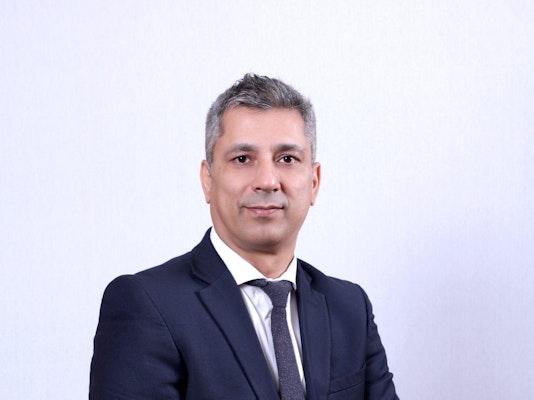
Vikas Sardana on leadership, technology, and why modern rail networks must move in rhythm with people, not just schedules
Since September 2021, Keolis MHI — a joint venture led by global transport operator Keolis together with Mitsubishi Heavy Industries Engineering and Mitsubishi Corporation — has been responsible for operating and maintaining the Dubai Metro and Tram networks under a multi-year contract with the Roads & Transport Authority (RTA). The company oversees one of the world’s longest fully automated metro systems, including the Red and Green lines, as well as the city’s tram network, delivering high standards of safety, punctuality and passenger experience while supporting the emirate’s smart mobility goals.
In this interview, Vikas Sardana, Acting Managing Director of Keolis MHI, reflects on the organisation’s leadership philosophy, its approach to innovation and sustainability, and how advanced technologies and a passenger-centric culture are shaping the future of rail transport in Dubai.
How would you define your leadership vision for guiding the rail transport network at this pivotal stage of its development?
Our vision is built on a clear principle: to make the transport ecosystem smarter, more sustainable, and more deeply connected to people’s daily lives. We are not simply operating trains and stations-we are redefining the role of public transport in the city so that it becomes a natural part of the urban rhythm and a seamless element of everyday mobility.
We adopt a “think like a passenger” culture, meaning that every operational or technical decision starts with the user’s needs-comfort, convenience, and safety.
How does the partnership between Keolis and Mitsubishi Heavy Industries translate into day-to-day performance across your projects?
This partnership brings together world-class operational expertise and engineering excellence. Keolis contributes extensive global experience in managing the networks, while Mitsubishi Heavy Industries brings deep technical and engineering capabilities, having been involved in the development of the core infrastructure from the start. This synergy results in operations that meet the highest standards of safety and quality, meticulous maintenance, and data-driven asset management-ensuring exceptionally high availability, reliability, and overall network harmony.
What makes the Keolis–MHI team the backbone of your success?
Our people are our true success factor. We rely on over 1,700 well-trained professionals, equipped with the competencies needed to run a modern mobility system, and guided by a culture that places safety first and the passenger at the center of every operational decision. We also place strong emphasis on Emiratisation, having successfully attracted and trained young Emirati talents, including field and administrative leaders. This reflects our commitment to supporting the national vision of building local expertise in one of the most sensitive and significant sectors.
What makes the passenger experience in this system more than just a means of transportation?
Air-conditioned stations, punctual services, seamless integration with buses and marine transport, and the speed and fluidity of movement all create a calm, safe, and reliable travel experience.
Our goal is for every user to feel that their trip is part of a city run professionally and designed to make their day smoother and more organised.
Something which comes before everything else is the safety and happiness of our passengers, which we are focusing on in all our activities.
What are the key technologies you rely on to enhance safety and reliability?
The metro operates on a fully automated, advanced train control system that ensures precise movement and coordination. We also employ predictive maintenance, using continuous data streams to detect potential issues before they occur-reducing disruptions and extending asset life. In addition, we adhere to strict standards for safety, asset management, and cybersecurity, supported by a “zero harm” policy that forms the backbone of our operational culture.
To what extent does smart data analysis help you understand ridership patterns and anticipate demand?
We use advanced analytics systems that draw near real-time data from stations and trains, enabling us to understand daily mobility patterns and forecast peak-hour demand.
This allows us to adjust train distribution, refine timetables, plan maintenance, and continuously enhance the passenger experience. It is a system that makes operations more agile and more capable of adapting to the needs of a fast-growing city like Dubai.
What are the biggest challenges you face in managing a network of this scale and precision?
The main challenge is maintaining perfect alignment between technical performance and the passenger experience. Even minor disruptions can affect thousands of passengers within minutes.
Managing a network of this size requires complex coordination between operations, maintenance, asset management, and workforce training-all while strictly adhering to safety standards and ensuring service regularity.
Is there a human moment that has stayed with you during your daily management of the network?
The moments that touch me most are when passengers express their appreciation for the comfort and safety they feel while using the metro every day.
Seeing a student, an employee, a mother with her child, or an elderly passenger relying with full confidence on the system reminds me that our work is not just about running trains—it is about improving people’s quality of life. This human dimension accompanies me every day.
How have your previous experiences-including your work in India-shaped the way you manage this advanced system?
Working in countries with high population density and complex transport systems provides valuable insights into managing heavy passenger flows and long-term planning.
These experiences helped me develop an approach based on operational discipline, flexibility, risk management, and adapting global best practices to Dubai’s culture and the needs of its diverse users.
How do you expect the concept of “smart mobility” to evolve in the emirate in the coming years?
I believe the future will bring greater integration between all modes of transport, deeper reliance on data and smart analytics, and a shift toward a fully connected city where different systems operate in harmony. The metro and tram will remain central to this shift, supported by the growing role of Emirati talent in leading this vital sector.
We also expect sustainable mobility to expand, reducing emissions and strengthening Dubai’s position as a global model for environmentally friendly cities.
What message would you share with today’s passengers about the future of this network and its role in urban life?
My message is simple: this network was designed for you to make your daily life easier, safer, and more convenient.
Its future will be even more advanced, intelligent, and sustainable, and it will continue to be an essential part of Dubai’s heartbeat and its path toward becoming the city of the future.
We invite everyone to embrace public transport as a partner in creating better urban living and more connected, human-centered cities.