
The Business Behind Modern Mobility Interview with Logistics News
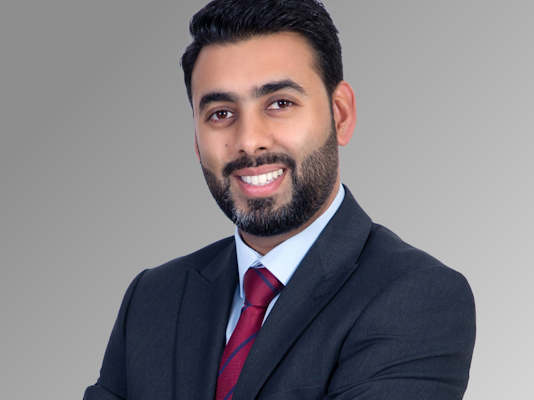
In this discussion, Riaz Bharuchi, Chief Financial Officer of Keolis MHI, shares insights into how the company approaches financial sustainability, supply chain resilience, ethical procurement, digital transformation, and ESG integration while supporting the UAE's long-term economic and sustainability ambitions.
Interviewer: Dubai’s D33 agenda aims to double the city's economy and position Dubai among the world's leading urban centers. How does your financial strategy support this vision?
Riaz Bharuchi: At Keolis MHI, we believe that financial strategy should enable growth, not simply support operations. As a leading public transport operator, our role is to ensure that the city benefits from a reliable, efficient, and financially sustainable transport system.
Every investment we make is evaluated based on its ability to enhance reliability, operational efficiency, and passenger experience. By maintaining predictable operating costs and optimizing resources, we help create the stable mobility infrastructure that supports business growth, tourism, and workforce connectivity across Dubai. In that sense, sound financial management is an important contributor to the broader ambitions of the D33 agenda.
Interviewer: In today's global economy, resilience has become a key priority. What does operational resilience mean for a major transport operator, and how do you protect capital investments from market volatility?
Riaz Bharuchi: For us, resilience means ensuring continuity of service regardless of external challenges. Whether it is fluctuations in commodity prices, disruptions in global supply chains, or currency movements, our objective is to minimize the impact on operations and long-term projects.
We achieve this through rigorous financial planning, scenario analysis, and close collaboration with suppliers and partners. By securing long-term agreements where appropriate and diversifying our sourcing strategies, we reduce exposure to sudden market changes. Ultimately, our passengers should never feel the effects of global disruptions on the reliability of the services they depend on every day.
Interviewer: A transport network relies on the availability of critical parts and equipment. How has Keolis MHI approached procurement financing to maintain availability while controlling costs?
Riaz Bharuchi: Finding the right balance is essential. Holding excessive inventory can tie up capital unnecessarily, while insufficient stock can create operational risks.
Our approach combines data-driven forecasting with strategic inventory management. By analysing historical consumption patterns, asset criticality, and supplier lead times, we prioritize investment in components that are essential to network reliability while maintaining greater flexibility for standard items. This allows us to optimize working capital without compromising service continuity.
Interviewer: Keolis MHI has received the Chartered Institute of Procurement & Supply (CIPS) Ethics Mark for consecutive years. How does ethical procurement contribute to financial performance and risk management?
Riaz Bharuchi: Ethical procurement is fundamentally linked to long-term business performance. Strong governance and transparent procurement processes help reduce exposure to supplier misconduct, compliance issues, fraud, and reputational risks that can ultimately result in significant financial costs.
Receiving the CIPS Ethics Mark reflects the standards we apply across our procurement activities. It provides confidence to our stakeholders, suppliers, and partners that our decision-making processes are transparent, fair, and aligned with internationally recognized best practices. Ethical business practices are not only the right thing to do-they also contribute directly to operational stability and financial resilience.
Interviewer: How do predictive analytics and financial planning help you address supply chain challenges before they affect operations?
Riaz Bharuchi: One of the advantages of digital transformation is the ability to connect financial planning with operational data in real time.
For example, when maintenance teams identify a component that is showing a higher-than-expected wear rate, our financial and procurement teams can immediately assess funding requirements, supplier availability, and delivery timelines. This enables us to initiate procurement well before the component reaches the end of its lifecycle. As a result, potential disruptions become planned maintenance activities, helping us maintain high levels of reliability across the network.
Interviewer: How does Keolis MHI's investment in digital transformation support the UAE Vision 2031 objective of building a forward-looking economy?
Riaz Bharuchi: The UAE Vision 2031 places a strong emphasis on innovation, productivity, and the adoption of advanced technologies. Our digital transformation initiatives are closely aligned with these objectives.
We continue to invest in automation, data-driven decision-making, and digital platforms that streamline both operational and financial processes. These initiatives improve efficiency, reduce administrative burdens, and enable our teams to focus more on strategic analysis and continuous improvement. Beyond operational gains, digital transformation also helps develop future-ready skills within our workforce, supporting the broader goals of the national vision.
Interviewer: Sustainability has become an important business consideration. How is Keolis MHI integrating ESG principles into financial decision-making?
Riaz Bharuchi: ESG considerations are increasingly embedded in the way organizations evaluate investments and long-term value creation, and Keolis MHI is no exception.
When assessing projects, procurement decisions, or asset lifecycle strategies, we consider not only financial returns but also environmental and social impacts. Factors such as energy efficiency, waste reduction, resource optimization, and long-term sustainability play an important role in our evaluation process.
In many cases, environmentally responsible solutions also generate operational efficiencies and cost savings over time, demonstrating that sustainability and financial performance can go hand in hand.
Interviewer: The UAE has designated this year as the "Year of Family." How does maintaining a world-class transport system contribute to quality of life for families and communities?
Riaz Bharuchi: Reliable public transport has a direct impact on people's daily lives. Every journey that runs on time, every smooth connection, and every minute saved contributes to a better experience for residents and visitors alike.
From our perspective, reliability is about more than operational performance, it is about creating value for society. When people can depend on safe, efficient, and predictable transportation, they spend less time dealing with uncertainty and more time focused on work, education, leisure, and family life.
As a leading public transport operator, we are proud to contribute to the quality of life that makes Dubai one of the world's most attractive places to live, work, and visit. Supporting mobility ultimately means supporting communities, and that remains at the heart of everything we do.